
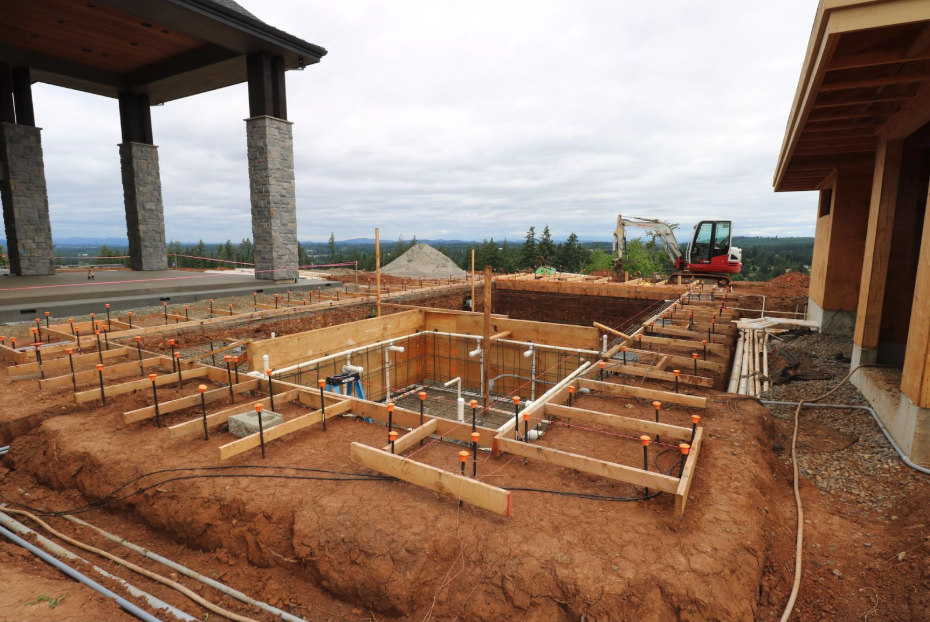
You’ve decided you want an inground pool. You’ve heard the words gunite and shotcrete thrown around, maybe even concrete, and at some point someone told you one of them is better. But nobody really explained why — or what any of it actually means for the pool you’re about to spend serious money on.That’s what this is for. By the end, you’ll understand the real difference between gunite and shotcrete, what your pool’s surface actually is, and why the decisions made before a shovel hits your yard will affect you – and your pool – for the next 20 to 30 years.
Gunite and Shotcrete Aren’t the Same Thing
Both are cement-based. Both are applied pneumatically — meaning sprayed through a nozzle at high pressure onto a steel rebar framework. And both produce a strong, durable pool shell that can be shaped into virtually any design you can dream up.
Gunite vs Shotcrete for Your Pool
The difference is in how the concrete is mixed. Gunite is a dry process: cement and sand are mixed dry and fed through a hose, with water added at the nozzle right before application. Shotcrete is a wet process: the concrete arrives on site already mixed to spec, and the nozzleman’s job is focused entirely on accurate placement.
Water-to-Mix Ratio for Your Pool
That distinction matters more than it sounds. With gunite, the water-to-mix ratio is controlled in real time by the nozzleman — which means it’s only as consistent as the person holding the gun. With shotcrete, the mix is already set before it ever reaches the job site. One less variable. One less point of potential failure.
A Pool Built to Last
Both methods, done right by an experienced crew, produce a pool shell built to last. The conversation about which is “better” is real, and there are quality builders on both sides. What matters most is that whoever is applying it knows what they’re doing — because neither method is forgiving of sloppy technique.
The Shell Is Just the Start
Here’s something that surprises a lot of people: the gunite or shotcrete shell isn’t what you’re actually swimming against. It’s the structure — the bones of the pool. But the surface you touch, the finish you see, is a separate layer applied on top.
Pool Interior Finishes
The most common interior finish options are:
- White plaster — the traditional choice. Smooth, relatively affordable, and perfectly serviceable when water chemistry is kept in balance. It’s also the most sensitive finish to neglect.
- Quartz aggregate — a step up in durability. More resistant to staining and etching, holds color better over time, and available in a wider range of looks.
- Pebble finishes — the premium tier. Extremely durable, with a natural texture and a range of aesthetic options that hold up well for years. Also the most expensive to install.
Making the Right Pool Material Selection
Each finish has its own tradeoffs in cost, feel underfoot, and how much maintenance it demands. Each one also has to bond correctly to the shell beneath it — which means application matters as much as material selection. The shell almost never fails first. It’s the finish where most early problems show up, and usually because of how it was applied or what it was applied to.
Why Water Chemistry and Your Pool Shell Are in a Relationship
Cement is naturally alkaline. That’s just chemistry. And it means what’s in your pool water has a direct, ongoing effect on your pool’s surfaces.
Acidic Water in Your Pool
Run your water acidic for too long and it starts attacking the plaster finish. The result is etching — a roughened, pitted texture that catches algae, isn’t pleasant to touch, and eventually exposes what’s underneath. It doesn’t happen overnight, but a full season of neglect can do real damage.
Pool Scaling
The flip side is scaling. High pH plus hard water causes calcium to drop out of solution and deposit on surfaces — that chalky white buildup you see at the waterline. It’s not structural, but it’s stubborn and looks bad.
Pool Chlorine
Chlorine itself isn’t the enemy, but high concentrations applied directly to a plaster surface without proper dilution can bleach and degrade it over time. This is less about the chemical and more about how it’s being used.
How Long Does a Pool Surface Last
A well-built pool with a quality finish can go 15 to 20 years before it needs resurfacing — if the water is managed consistently. The same pool with chronically unbalanced water can show significant surface deterioration within a couple of seasons. The shell holds up. The finish is what tells you whether the pool has been cared for.
Why DIY Concrete Pool Builds Usually Don’t Go the Way You Think
The idea comes up every few years: build your own backyard plunge pool, a small hot tub, maybe a lap pool. The tutorials exist. The materials are technically available. And the savings look real on paper.
What to Know about a DIY Pool
Here’s what those tutorials don’t show you.
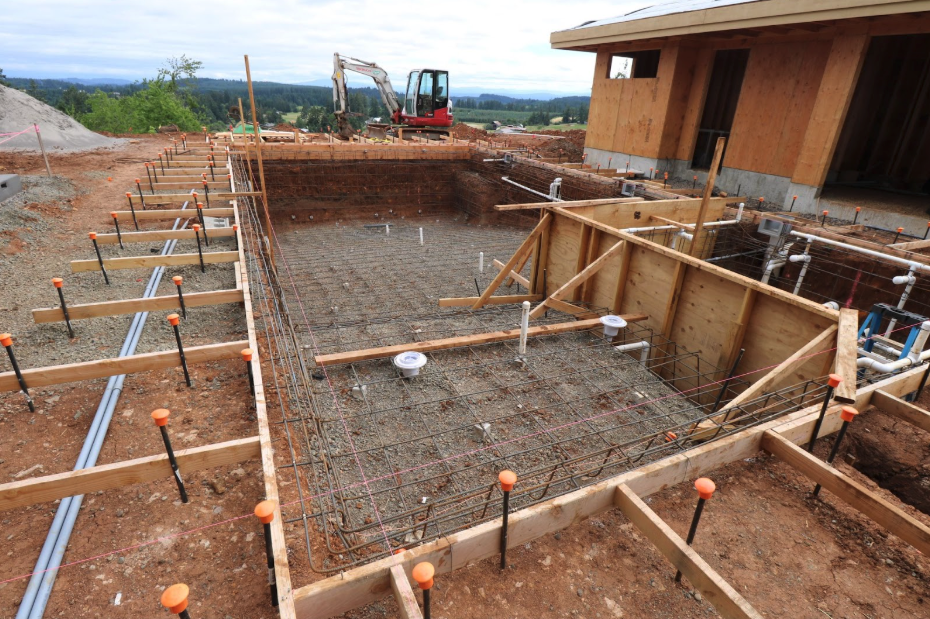
Shotcrete and gunite both require specialized equipment that isn’t available at a rental counter in configurations suitable for pool construction. Beyond the equipment, the technique takes years to develop. How you hold the nozzle, how far you stand from the surface, how you manage rebound waste, how you build thickness consistently — these things affect the structural integrity of the shell in ways that don’t show up immediately. A shell can look perfectly solid when it’s fresh and still have weak spots that crack, shift, or allow water intrusion within a year or two.
Concrete Mix Consistency
Mix consistency is a bigger deal than most people realize. Too much water in the mix weakens the final product significantly. With gunite especially, that ratio is happening in real time, on site, and it has to be right throughout the entire application — not just when it’s convenient.
Concrete Curing
Curing is where a lot of DIY builds quietly fail. The shell has to stay moist and at a consistent temperature for several days after application. Skip that process, rush it, or hit a cold snap without planning for it and you introduce micro-cracking that compounds over time. The pool looks fine. The problems show up later.
Rebar
Then there’s steel. Rebar has to be placed at the right spacing, with the right cover depth, and tied securely enough to stay in position when concrete is being sprayed at it under pressure. Rebar that shifts during application creates weak points you won’t find with a visual inspection.
Permitting
And permits. Inground pools require permits in virtually every jurisdiction in Washington state. Skip them and you’re looking at fines, potential forced removal, and real complications when it’s time to sell. A homeowner who built without permits has limited options and full liability.
Hidden Costs of a DIY Pool
The hidden cost of a DIY pool gone wrong isn’t just the materials you spent. It’s what a contractor charges to assess, demo, and redo what didn’t work — and that number typically exceeds what a professional build would have cost from day one.

What a Professional Build Actually Includes
Hiring a pool builder isn’t just paying someone else to do the labor. It’s buying the full sequence of decisions and expertise that makes the difference between a pool that holds up and one that doesn’t.
Pool Site Assessment
It starts before anyone touches a shovel — with a site assessment that looks at soil conditions, drainage, access, utility locations, and how the pool is going to integrate with your existing yard. That information shapes excavation, which shapes the rebar layout, which shapes the application schedule. Each step depends on the one before it being done right.
Pool Finish Selection
After the shell is applied and cured, finish selection happens with your specific water chemistry, your climate, and your aesthetic goals in mind. Plumbing, filtration, heating, and automation are designed and installed as part of a coherent system — not added on as an afterthought.
Pool Permitting in Clark County
Permits and inspections aren’t just bureaucratic overhead (we know they are a pain). They’re what ensures your pool was built to code and protects you at resale. A licensed builder handles this – it is built right into their systems.
Professional Pool Building
What an experienced pool builder brings that no YouTube tutorial can replicate is judgment built from doing this repeatedly — knowing what proper curing looks like, what a mix problem sounds like coming through the hose, what early signs of a finish bonding issue look like before they turn into something that needs to be demoed. That pattern recognition is the thing you’re actually paying for.
Hydrazzo: The Premium Finish Worth Knowing About
Not all pool finishes are created equal, and Hydrazzo sits near the top of the list for a reason.
What is Hydrazzo for Pools
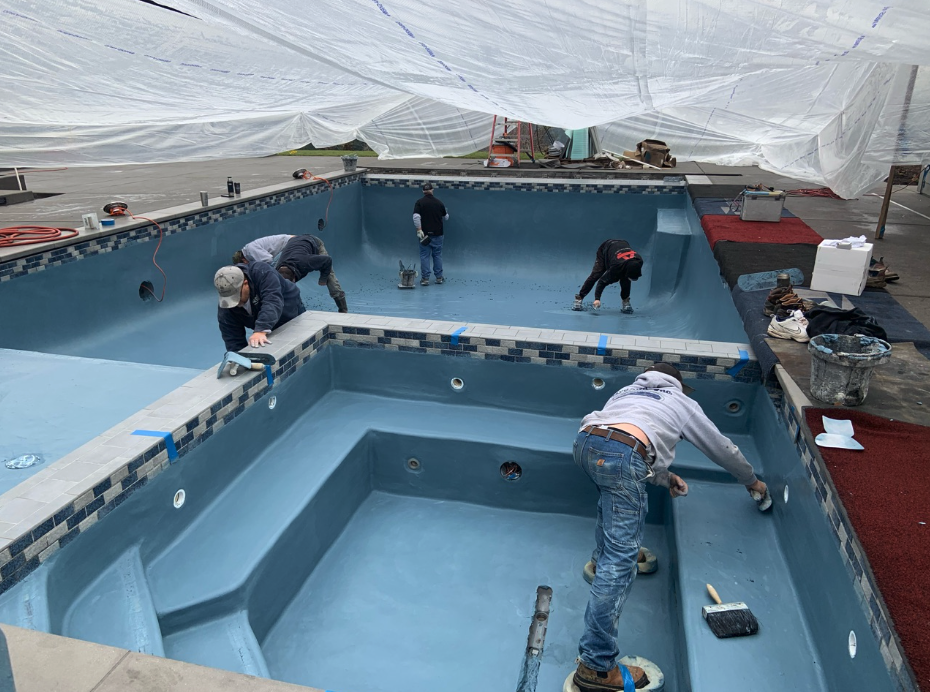
Hydrazzo is a polished marble aggregate finish — a step above standard plaster and even most quartz finishes. It’s made from coarse-graded crystalline and colored marble combined with white Portland cement, then hand-polished after application to bring out the marble’s natural luster. That final polishing step is what sets it apart. It’s what gives Hydrazzo its signature silky-smooth texture and that deep, color-intensifying effect you don’t get from a standard plaster or rough aggregate finish.
Smooth Surfaces for Swimming
The result is a surface that’s genuinely pleasant to be in — smooth on bare feet, easy on swimsuits, and visually striking in the water. Hydrazzo is also naturally more resistant to spot etching, topical staining, and algae adhesion than basic plaster, which is a meaningful advantage over the life of the pool.
What to Know Before You Choose It
Hydrazzo costs more upfront than standard plaster — and it takes longer to install correctly. The application and polishing process requires skilled hands and can’t be rushed. That extra time and labor is part of what you’re paying for.
Hydrazzo and Pool Water Chemistry
It also still requires consistent water chemistry management. Low pH is Hydrazzo’s biggest enemy — acidic water leaches minerals from the surface over time, dulling the polish and eventually roughening the texture. Keep your chemistry balanced and Hydrazzo can look and feel exceptional for a long time. Let it slide and you’ll see the effects faster than you’d expect.
Resurfacing Your Pool
Like any pool finish, Hydrazzo doesn’t last forever. Plan on refinishing every 10 to 15 years — sooner if water chemistry isn’t kept in check, potentially longer if it is. That’s a normal part of pool ownership, not a flaw in the material, but it’s worth factoring into your long-term budget when you’re comparing finish options.
Spot Repairs on Your Pool’s Finish
One practical note: if you ever need a spot repair, matching the original color exactly isn’t really possible. Hydrazzo’s variegated, blended colors come pre-mixed from the manufacturer. A patch will always be visible to some degree. It’s not a dealbreaker, but it’s worth knowing going in.
Is it Right for Your Pool
For the right homeowner — someone who wants a genuinely premium surface, is committed to proper water management, and is building a pool they plan to enjoy for a long time — Hydrazzo is one of the best finish options available. It’s the kind of detail that separates a pool you’re proud of from one you’re just maintaining.
Questions to Ask Before You Commit
If you’re still in the pool research phase, these are worth having answers to before you sign anything:
- What interior finish makes sense for my local water chemistry? Hard water areas have different needs than soft water areas, and the right answer isn’t the same everywhere.
- What does long-term maintenance actually look like for each finish option? A lower upfront cost sometimes means a higher ongoing commitment.
- Does this contractor specialize in gunite or shotcrete pool construction specifically? General concrete experience is not the same thing as pool construction experience.
- What does the workmanship warranty cover, and for how long? A contractor who stands behind their work will have a clear, confident answer to this.
- Are permits and inspections being handled as part of the build? If the answer is vague, pay attention to that.
Pool Construction in Vancouver
Gunite and shotcrete pools are both proven, durable, and worth building — when they’re built right. The material matters. The method matters. But the person and crew applying it matter most of all.
A pool is one of the larger investments you’ll make in your home. Getting the material right and the installation right from the start is what determines whether that investment pays off for 30 years or becomes a problem you’re managing in five.If you’re thinking about building and want a straight conversation about what the process looks like, what finish options make sense for your yard, and what it actually takes to do this right in the Vancouver, WA area — we’re happy to talk. That’s what we do at Water’s Edge.